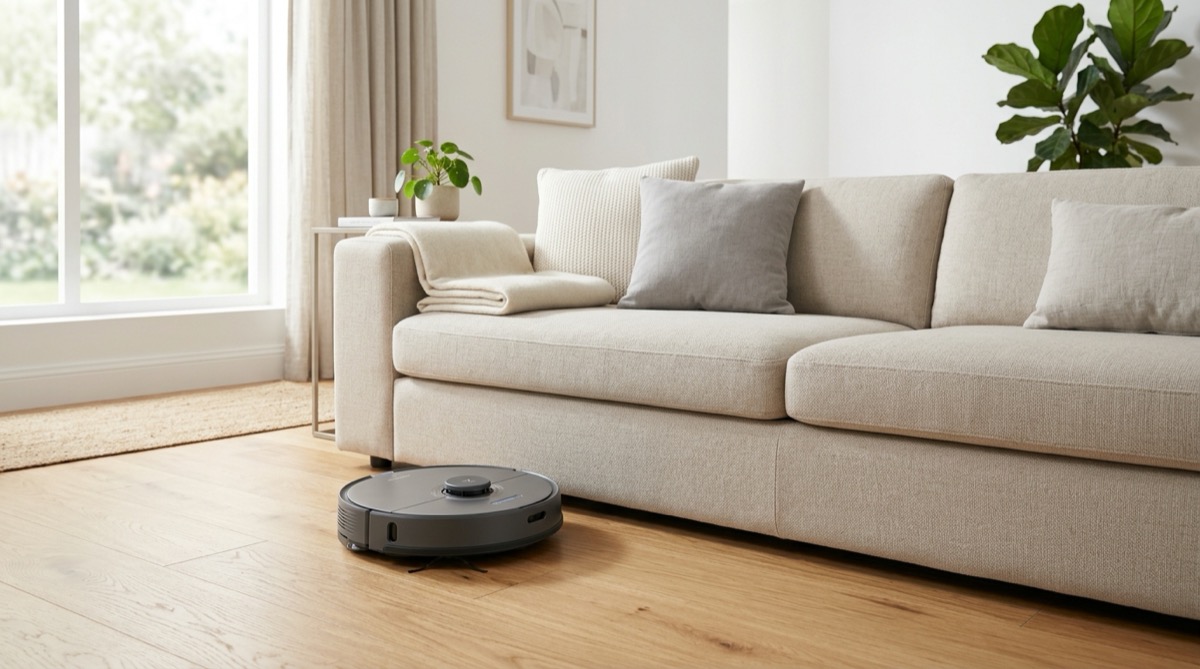
Robot vacuums promise convenience, but the gap between marketing and reality is wide. Many models look sleek in advertising yet fail at basic debris pickup, get stuck under furniture, or force you to babysit the app every single day. We ran seven current models through a standardized home test course — cereal on hardwood, pet hair on carpet, edge debris along baseboards — to find the ones that actually work.
How We Tested
Our test floor plan includes three room types: sealed hardwood, medium-pile carpet, and a mixed kitchen-dining area with chair legs. We spread 20 grams of standardized debris in each zone and measured pickup rates after a single cleaning pass. We also logged navigation errors, missed spots, noise levels, and how often the unit needed human rescue.
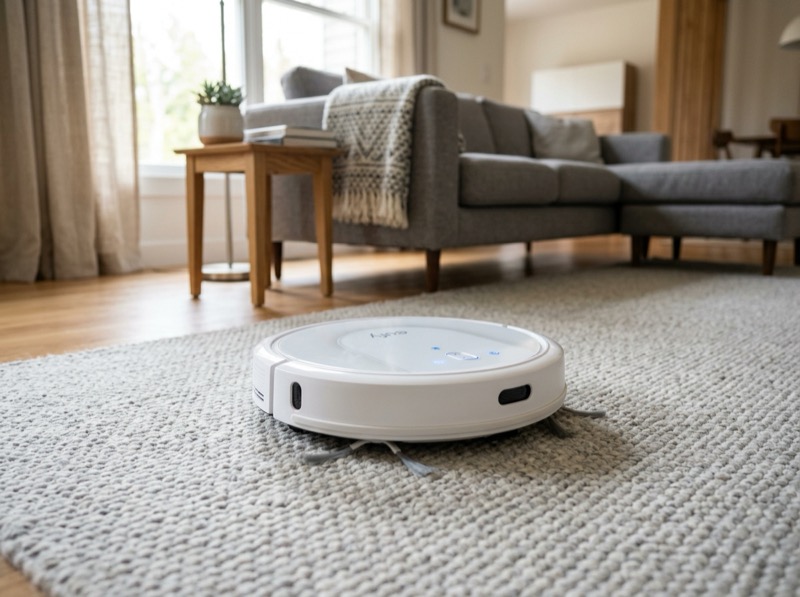
Best Overall: Eufy X10 Pro Omni
The Eufy X10 Pro Omni surprised us. At a mid-tier price point, it delivers reliable LiDAR navigation, strong suction on both carpet and hard floors, and a self-emptying base that genuinely reduces maintenance. In our debris test, it picked up 96 percent of material on the first pass — better than two premium competitors that cost nearly twice as much.
The mopping module is a bonus we did not expect to value, but the rotating mop pads scrub kitchen tile noticeably better than the drag-and-wipe systems on most hybrid units. The app is not perfect — mapping takes two full runs to stabilize — but once configured, you can schedule room-specific cleans with minimal fuss.
Pros
- 96% first-pass debris pickup
- Self-emptying dust bag lasts ~60 days
- Rotating mop pads outperform wipe plates
- Quiet enough for evening runs
Cons
- Initial mapping takes two full runs
- Mop pads need weekly rinsing
- App lacks advanced zone editing
Best for Pet Owners: Roborock Qrevo S
Pet hair is the ultimate test for robot vacuums. Fine strands wrap around brush rolls, clog filters, and trigger error codes mid-cycle. The Roborock Qrevo S uses a rubber-bristle hybrid brush that resisted tangling far better than standard bristle rollers in our tests, and its suction profile ramps up automatically on carpet to pull hair from deep fibers.
The dustbin is generous at 400ml, and the auto-empty dock has a 2.5L bag capacity — enough for several weeks of daily cleaning in a two-pet household. Our only complaint is obstacle avoidance. It is good, but not flawless; thin charging cables and sock edges still trip it occasionally.
Best Budget Choice: iRobot Roomba Essential Q
iRobot stripped the premium features out of the Essential Q, and the result is a refreshingly simple robot that does one thing well: vacuum. There is no LiDAR, no mop, no self-emptying dock. Instead, you get a random-bounce navigation system refined over two decades, a robust three-stage cleaning head, and a price under $250.
It is slower and less methodical than LiDAR models, and it will bump into furniture more often. But it is also the most repairable, the easiest to maintain, and impressively effective on carpets for its class. If your home layout is simple and your budget is tight, this is the safest purchase.
What to Skip
We advise caution with off-brand models sold under rotating storefront names on discount marketplaces. Several failed within weeks, lacked replacement parts, or had app permissions that requested far more phone access than necessary. Stick with established brands that publish firmware updates and maintain a parts ecosystem.
The Eufy X10 Pro Omni offers the best balance of performance, price, and convenience for most households. Pet owners should consider the Roborock Qrevo S for its anti-tangle brush and strong suction. If you want something simple and cheap that still works, the iRobot Roomba Essential Q is a rare budget pick that does not disappoint.
Long-Term Notes
Robot vacuums are appliances, not gadgets. A good unit should last three to five years with basic brush and filter replacement. We will retest these models at the six-month mark and update this guide with any durability or software issues that surface.